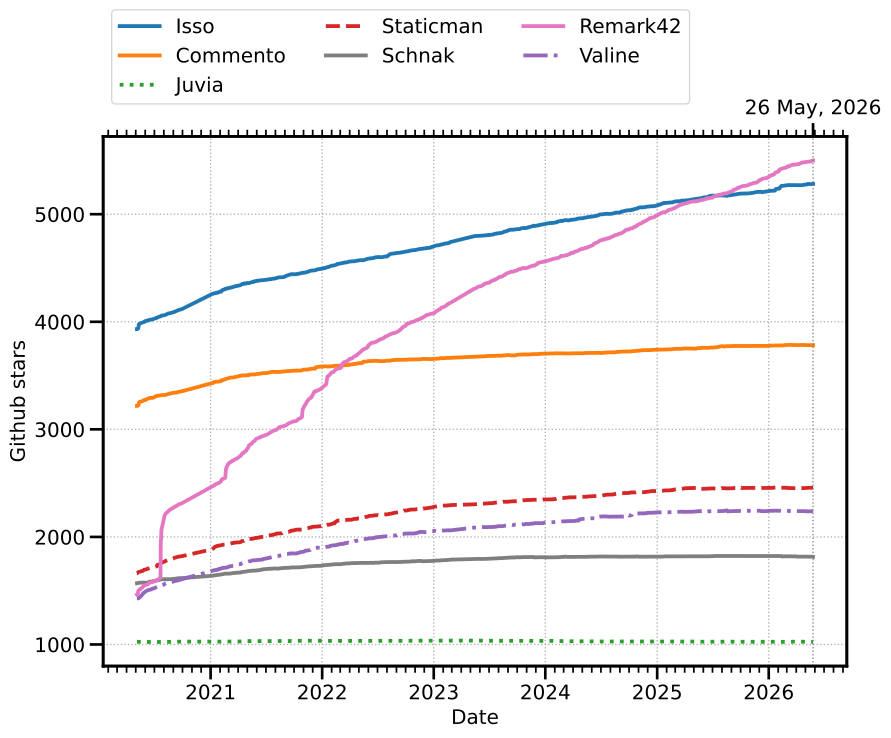
Stars vs. time
Indirect estimate of how active a project is. Hover a line to isolate it, click to lock; drag across the plot to zoom, double-click to reset.
Updated 2026-10-20
Series
A side-by-side comparison of open-source, self-hosted commenting systems for static sites — so choosing one doesn’t mean opening every repository yourself. Stars, open issues and last-commit dates are refreshed daily. Missing a system, or a column you need? Leave a comment below or open an issue.
Disqus loads absurd amount of tracking services, which exposes your visitors’ personal data and significantly increases loading time. See, e.g., this post.
For a static website, one usually wants a lightweight commenting server with as little dependencies as possible. Few commenting engines listed on the page are provided by heavy applications (e.g., discourse, talkyard), but the majority are relatively lightweight applications designed specifically to provide comments for the static pages.
This page prioritizes information on self-hosted comments. However, there are other open-source solutions, including implementations of third-party services (e.g., Github issues, such as [1], [2], [3], [4]).
There are also dokieli and hypothesis, that provide annotation-like functinality.
Also, there is an echo-chamber.
When a user submits a comment, echochamber.js will save the comment to the user's LocalStorage, so when they return to the page, they can be confident that their voice is being heard, and feel engaged with your very engaging content. It does not make any HTTP requests. Since LocalStorage is only local, you and your database need not be burdened with other people's opinions.
Indirect estimate of how active a project is. Hover a line to isolate it, click to lock; drag across the plot to zoom, double-click to reset.
Updated 2026-10-20
Click any row for the full record. An asterisk on the star count marks a repository whose last update was not clean — hover it for the reason.
Share your experience
Please share your experience if you are using one of the commenting systems listed in the table. Write a short summary and provide your "Likes" and "Dislikes" to help others to decide which commenting system suits them best.